The best church live streaming camera for budget conscious ministries is often a PTZ or HDMI camera that offers high resolution and reliable connectivity via software like OBS or vMix. Setting up an effective broadcast requires prioritizing good lighting, a dedicated audio mix, and thorough testing to ensure a professional experience for online viewers. Small ministries can achieve high production value by combining these affordable hardware options with simple streaming tools and a compact switcher.
A flickering image or a grainy sermon feed often creates a digital barrier between your message and a seeker watching from home. For many Indian ministries, the transition from simple smartphone broadcasts to a professional setup feels like a daunting financial leap. However, your church live streaming camera is more than just a piece of hardware; it is a digital window into your sanctuary that must reflect the excellence of your mission. In this guide, we will explore how to elevate your broadcast without overextending your budget. We will compare camcorders and PTZ systems, provide specific camera recommendations for small to mid sized congregations, and share technical insights on framing and lighting. By the end of this article, you will have a clear roadmap for building a stable and professional broadcast setup that honors your ministry and connects deeply with your online community.
The Mission of Digital Ministry: Why Your Church Live Stream Camera Matters
The Great Commission commands us to go into all the world and preach the gospel. In the modern era, all the world includes the digital landscape where millions of people spend their time daily. For ministries across India, particularly within the vibrant spiritual communities of Kerala, the internet has become a vital mission field. Investing in a quality church live streaming camera is not about pursuing high tech gadgets for their own sake; it is about stewarding technology to glorify God and reach those who cannot step inside a physical sanctuary.
Indian worship services are unique in their sensory richness. From the deep reds and golds of traditional vestments to the expressive movements of a worship team in a charismatic service, visual clarity matters. A grainy or stuttering feed can distract from the message of the Gospel. By ensuring your broadcast captures the true colors and emotion of your service, you bridge the gap between the physical pews and the digital viewer. If you need help defining your ministry's visual identity, you can contact our media production team to discuss how to elevate your broadcast. We view every lens and every frame as a tool for kingdom impact, ensuring your message remains the central focus.
When to Move Beyond the Smartphone: Evaluating Your Current Setup
Starting a digital ministry often begins with the most accessible tool available: a smartphone. For a small gathering or a quick testimony, a modern phone can produce surprisingly clear results. However, as your online congregation grows, the technical limitations of mobile hardware become apparent, particularly in the unique environment of a house of worship. Many traditional halls in Kerala feature high ceilings and warm, ambient lighting that, while beautiful in person, often results in grainy and noisy video when captured by the small sensors found in mobile devices.
Technical reliability remains a significant hurdle for long-form content. Sunday services in India are often comprehensive, frequently exceeding two hours of continuous recording. Smartphones are not designed for high-definition broadcasting over these extended periods; they often succumb to overheating, which causes the stream to stutter or shut down entirely. Additionally, a phone lacks the optical zoom necessary to capture a clear, intimate shot of the pulpit from the back of the sanctuary. Relying on digital zoom only degrades the image quality, making the speaker appear pixelated and distant to those watching at home.
Transitioning to a dedicated church live streaming camera represents a move toward professional stewardship. A standalone camera provides the stability and thermal management required for long services while offering superior lens quality. This upgrade allows for precise framing of the worship band and the speaker, ensuring that every gesture and expression is clearly visible. By moving beyond the phone, you ensure that the technical medium never distracts from the spiritual message, providing a consistent and reliable experience for your digital parish.
Camcorder vs PTZ Camera: Which Is Right for Your Sanctuary?
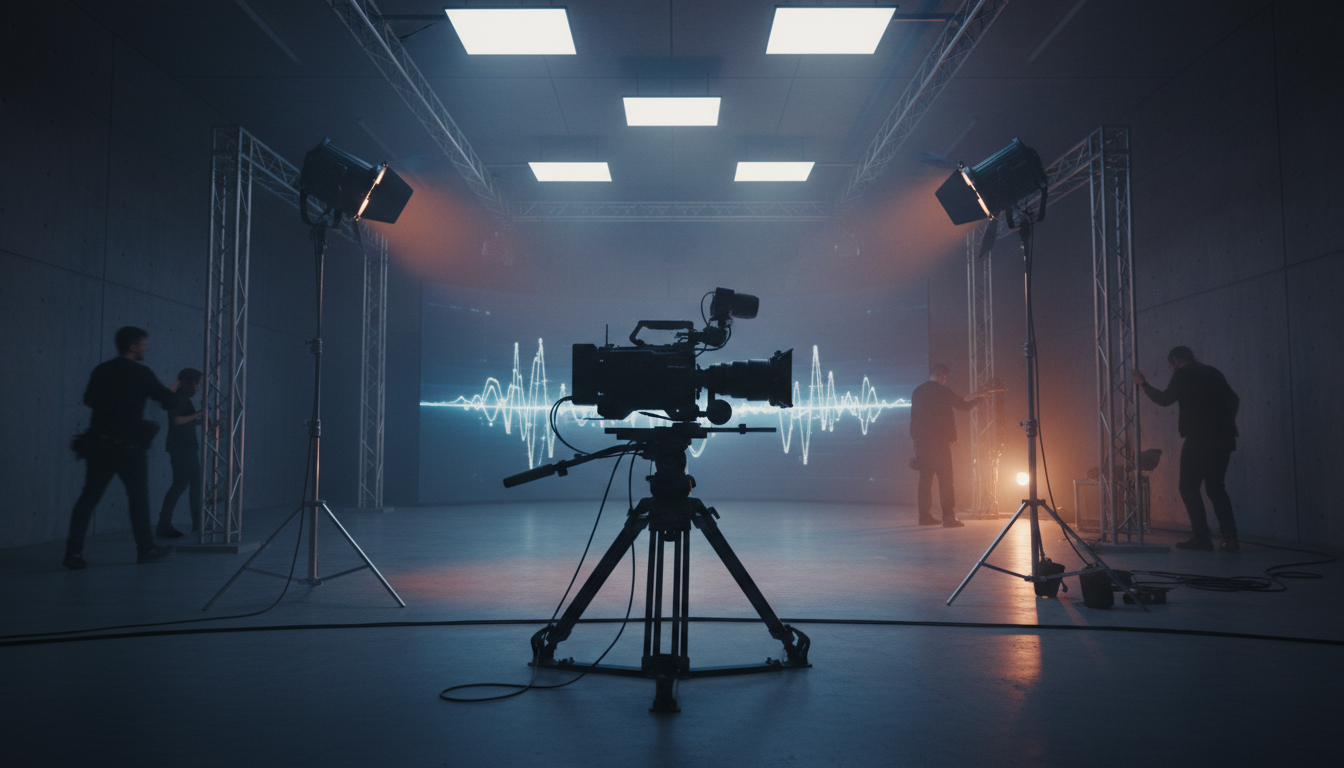
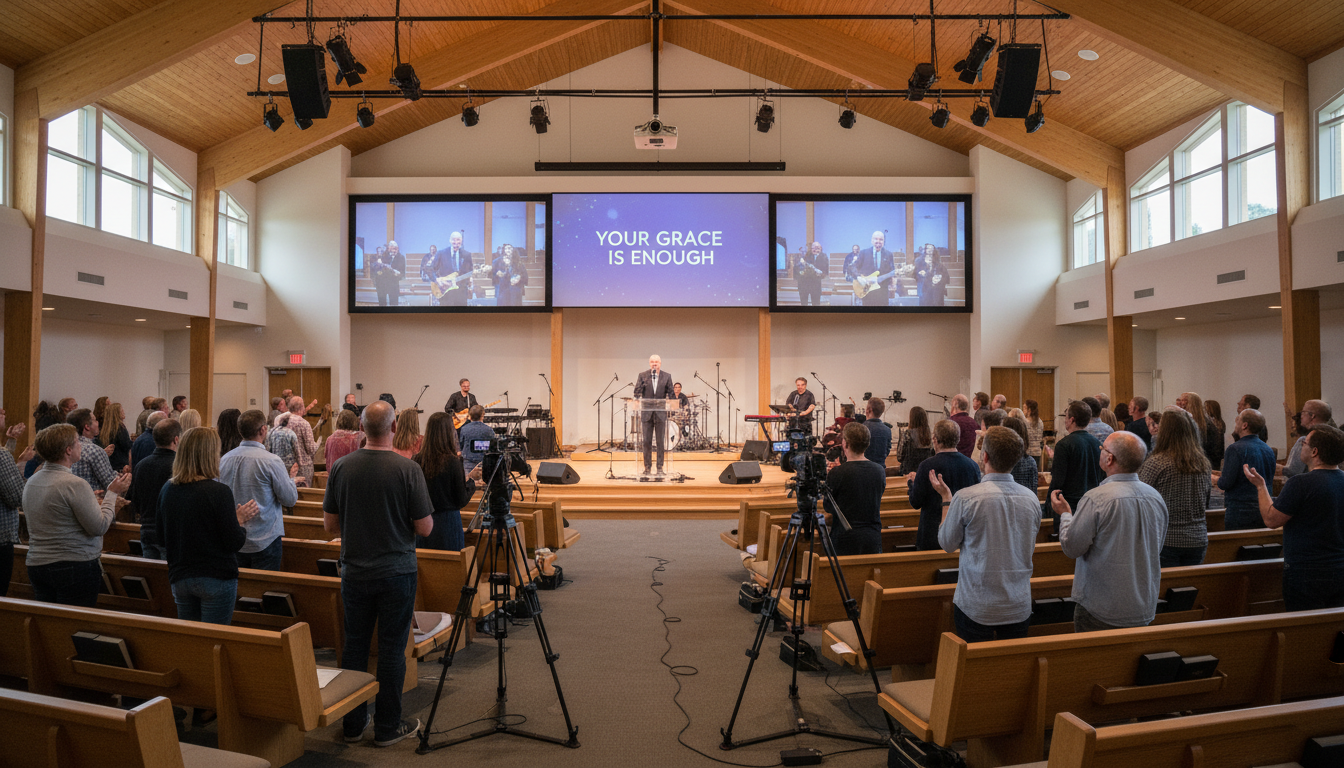
Once you decide to move beyond a smartphone, the choice typically narrows down to two primary form factors: the PTZ (Pan, Tilt, Zoom) camera and the traditional camcorder. A PTZ church live streaming camera is a motorized unit designed for permanent installation. These units are operated remotely via a controller or software, allowing a single volunteer to manage multiple camera angles from a central production desk. For many Kerala ministries with limited technical staff, this efficiency is invaluable. You can program preset positions for the pulpit, the choir, and the altar, switching between them with the press of a single button without needing a person standing behind every lens.
Traditional camcorders offer a different set of advantages, particularly regarding image fidelity. At a similar price point, a camcorder typically features a larger image sensor and a superior lens compared to a budget PTZ. This results in better performance in the ambient, often dim lighting found in traditional sanctuaries. Camcorders also provide manual, artistic control over focus and depth of field. This versatility is essential if your ministry also produces event recaps, docu-style testimonies, or outdoor conventions where mobility is required. Because they are not bolted to a wall, they can be repurposed for almost any creative project.
Architecture plays a significant role in this decision. Many churches in Kerala are housed in historic buildings with high, sloping wooden ceilings or ornate pillars that make running long cables and mounting permanent hardware a challenge. A PTZ requires a stable, permanent mount and dedicated power and data lines. If your sanctuary has restrictive heritage architecture or lacks a dedicated balcony for equipment, a camcorder on a high-quality tripod may be the more practical and less invasive choice. If your team needs guidance on which hardware fits your specific sanctuary layout, you can contact our media production team for a professional consultation.
Feature | PTZ Camera | Traditional Camcorder |
|---|---|---|
Operation | Remote (Joystick or Software) | Manual (Operator at camera) |
Manpower | One person for multiple units | One person per camera |
Image Quality | Good (Convenience focus) | Excellent (Sensor focus) |
Versatility | Fixed (Broadcast only) | Portable (Multi-purpose) |
Installation | Permanent Wall or Ceiling Mount | Tripod-based |
Top Budget Camera Recommendations for Small to Mid Sized Churches
Selecting the right hardware requires balancing your ministry’s vision with responsible financial stewardship. The most critical technical requirement for any church live streaming camera is a Clean HDMI output. This feature ensures the camera sends only the video signal to your broadcast software, omitting on-screen information like battery levels, focus boxes, or timecodes that would otherwise distract your digital congregation. Without a clean output, your stream will look like a home movie rather than a professional broadcast.
For ministries just starting their journey, entry level camcorders offer a significant step up from mobile devices at a manageable price point. The Sony HDR-CX405 is a widely available choice in India, typically priced between ₹18,000 and ₹22,000. While it features a smaller sensor, its 30x optical zoom is far superior to any smartphone, allowing you to capture clear shots of the pulpit from a distance. The Canon Legria series offers similar reliability for those who prefer the Canon color science, which many find renders skin tones more naturally in indoor lighting.
As your production needs evolve, moving into the mid-range mirrorless category provides the cinematic quality seen in professional ministry spotlights. The Sony ZV-E10, priced around ₹60,000, has become a favorite for Indian churches due to its large APS-C sensor, which excels in the low-light conditions often found in traditional halls. The Canon EOS M50 Mark II is another excellent contender in the ₹55,000 to ₹60,000 range. Both cameras allow you to swap lenses, giving you the flexibility to use a wide lens for worship and a telephoto lens for the sermon.
Camera Tier | Recommended Model | Approx. Price (INR) | Primary Benefit |
|---|---|---|---|
Entry-Level Camcorder | Sony HDR-CX405 | ₹20,000 | High zoom for small budgets |
Mid-Range Hybrid | Sony ZV-E10 | ₹60,000 | Excellent low-light performance |
Budget PTZ | OBSBOT Tail Air | ₹50,000 | AI tracking for moving speakers |
Professional PTZ | BirdDog Eyes P100 | ₹1,15,000 | NDI support for complex setups |
For churches prioritizing ease of use, budget-friendly PTZ cameras like the OBSBOT Tail Air provide automated features that reduce the need for multiple volunteers. These units often include AI-powered tracking to follow a pastor as they move across the stage. If you are unsure which specific model integrates best with your existing sanctuary layout, you can contact our media production team to help you build a setup that fits your budget while maintaining high standards of excellence.
The Art of Framing: Church Live Stream Camera Angles that Connect
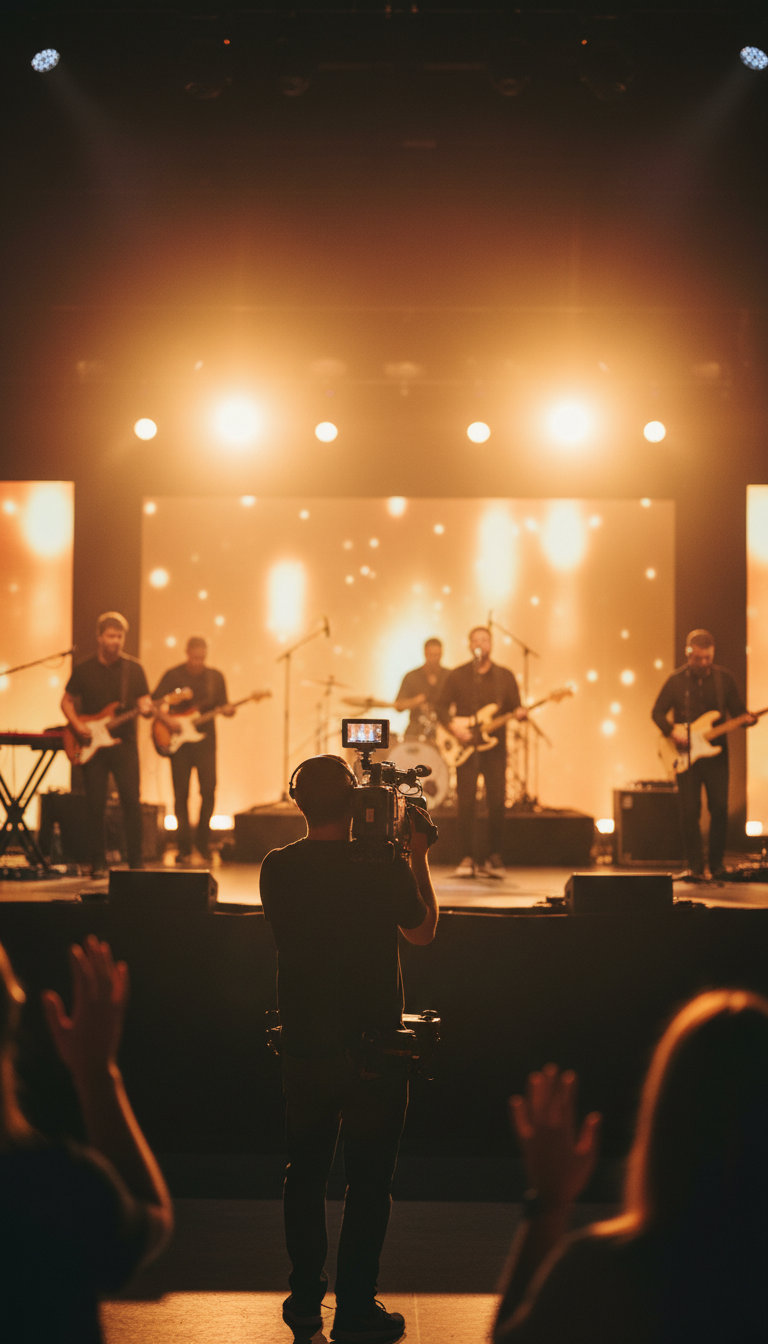
Selecting a high-quality church live streaming camera is only the first step; how you position that lens determines the level of engagement your digital congregation feels. Framing acts as a visual bridge between the physical sanctuary and the home viewer. To create a professional look, apply the Rule of Thirds. Instead of centering the pastor like a passport photo, align their eyes along the top horizontal third of the frame. This composition feels more natural and less clinical, guiding the viewer’s focus to the message.
Effective broadcasts rely on a variety of perspectives to maintain interest over a long service. Aim for three essential shots:
The Wide Shot: This captures the full altar or stage, allowing viewers to see the architecture, the choir, and the overall environment of the service.
The Medium Shot: Framed from the waist up, this shot is ideal for the sermon. It provides enough intimacy to see the speaker’s gestures and expressions without being intrusive.
The Tight Shot: Used for testimonies or worship moments, this focuses on the face to convey deep emotion and sincerity.
Avoid the temptation to mount cameras high in a distant balcony. This perspective makes the viewer feel like a detached observer rather than a participant. Position your camera at eye level whenever possible to mimic the view from a person sitting in the pews. If you need assistance designing a layout that fits your specific sanctuary, contact our media production team to ensure every angle serves your ministry’s vision.
Lighting for Faith: How to Make Your Stream Look Warm and Professional
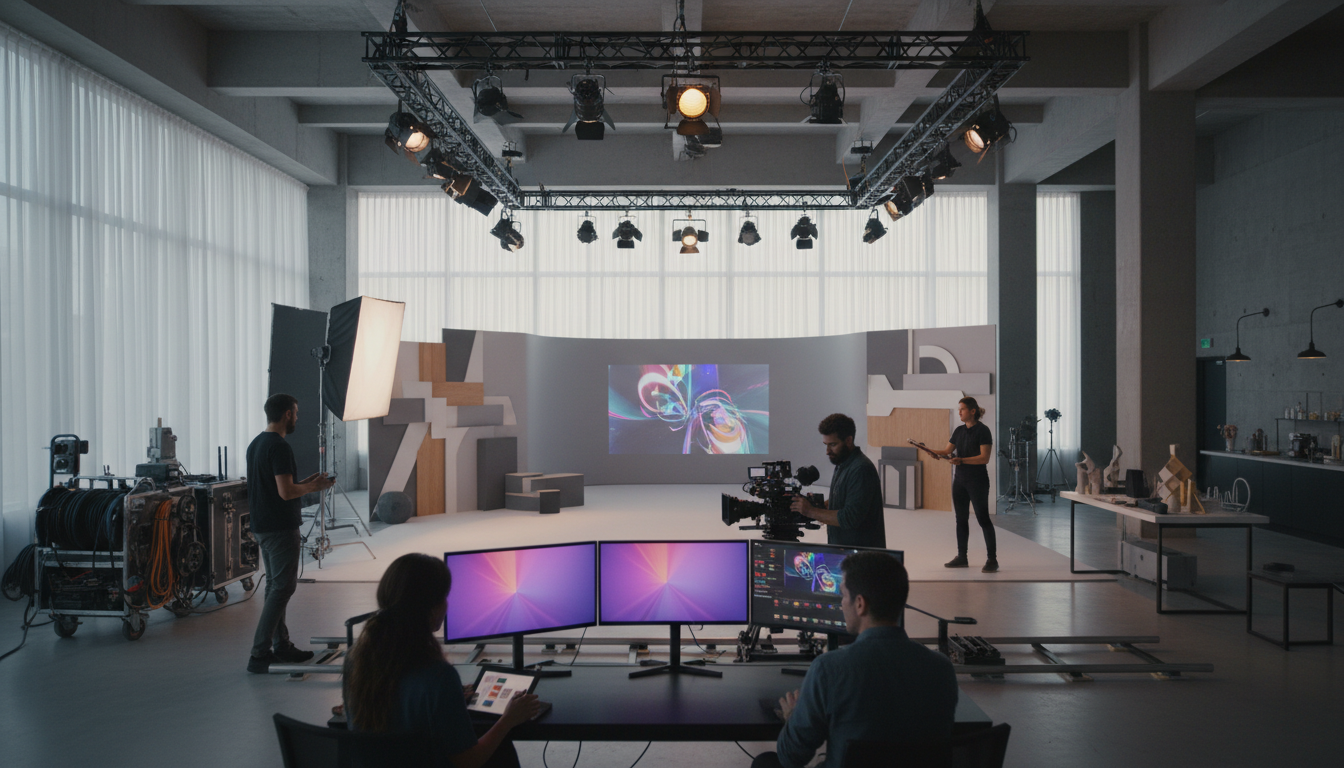
Even the most advanced church live streaming camera cannot compensate for a poorly lit sanctuary. Light is the fundamental language of video; in many Kerala churches, this language is often muddled by mixed light sources. You might find warm, yellow tungsten bulbs in the ceiling competing with harsh, blue-toned natural light streaming through side windows or open doors. This conflict confuses the camera's white balance, often making skin tones look sickly or unnatural on screen. To combat this, you must prioritize a dedicated lighting strategy that focuses on the subject's face, ensuring the pastor is clearly visible and separated from the background.
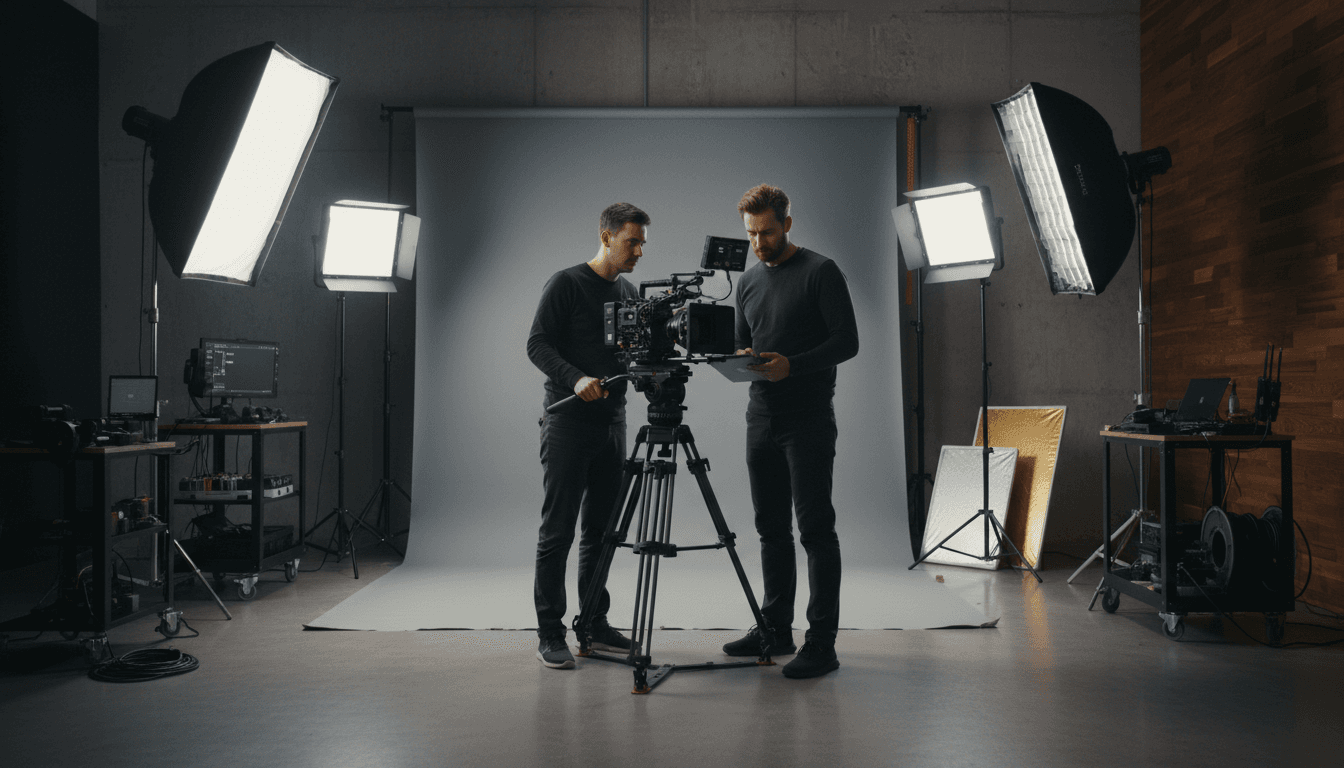
A standard three-point lighting setup is the most effective way to achieve a professional look. This involves a primary key light to illuminate the speaker, a fill light to soften shadows, and a backlight to create a subtle glow around the shoulders, which prevents the speaker from blending into the altar. For a ministry setting, choose high-quality LED panels with adjustable color temperatures. Using warm-toned settings helps avoid a sterile, clinical atmosphere, instead creating an inviting and reverent environment for the viewer. Proper front lighting is essential because, without it, even a high-end camera will struggle with digital noise in the shadows. If your sanctuary has complex architectural shadows or high-contrast windows, you can contact our media production team to design a lighting plan that enhances your ministry's visual warmth.
Essential Accessories for a Stable Indian Church Broadcast
A professional broadcast depends on the infrastructure supporting your church live streaming camera. Invest in high-quality, shielded HDMI cables and reliable capture cards, such as those from Elgato or Blackmagic Design, to prevent signal dropouts during a service. In Kerala, local environmental factors require specific precautions. Frequent voltage fluctuations can damage sensitive electronics; therefore, a dedicated UPS is non-negotiable for power stability and equipment longevity. Additionally, the region’s high humidity demands equipment with excellent thermal management to prevent mid-service shutdowns caused by internal heat buildup. For sanctuaries with traditional wooden floors, use heavy-duty tripods with spreader bars or rubber feet to dampen vibrations from foot traffic or congregational singing. If you need assistance selecting compatible peripherals for your specific climate, contact our media production team to ensure your technical foundation is as strong as your message.
Finding the perfect balance between quality and cost is the secret to a successful live stream for your Indian ministry. While the hardware choices can feel overwhelming, focusing on your specific needs will help you reach your congregation effectively. If you want expert help designing a setup that fits your unique space, our team at U4CHIRST CREATIONS is ready to assist. You can Contact Us to explore how we can elevate your ministry's digital presence together.